
Participation in the XIX Meeting of Heads of Central Departments for Counter-Terrorism and Counter-Extremism of Competent Authorities of CIS Member States
10 June 2026, 14:52 | 1078
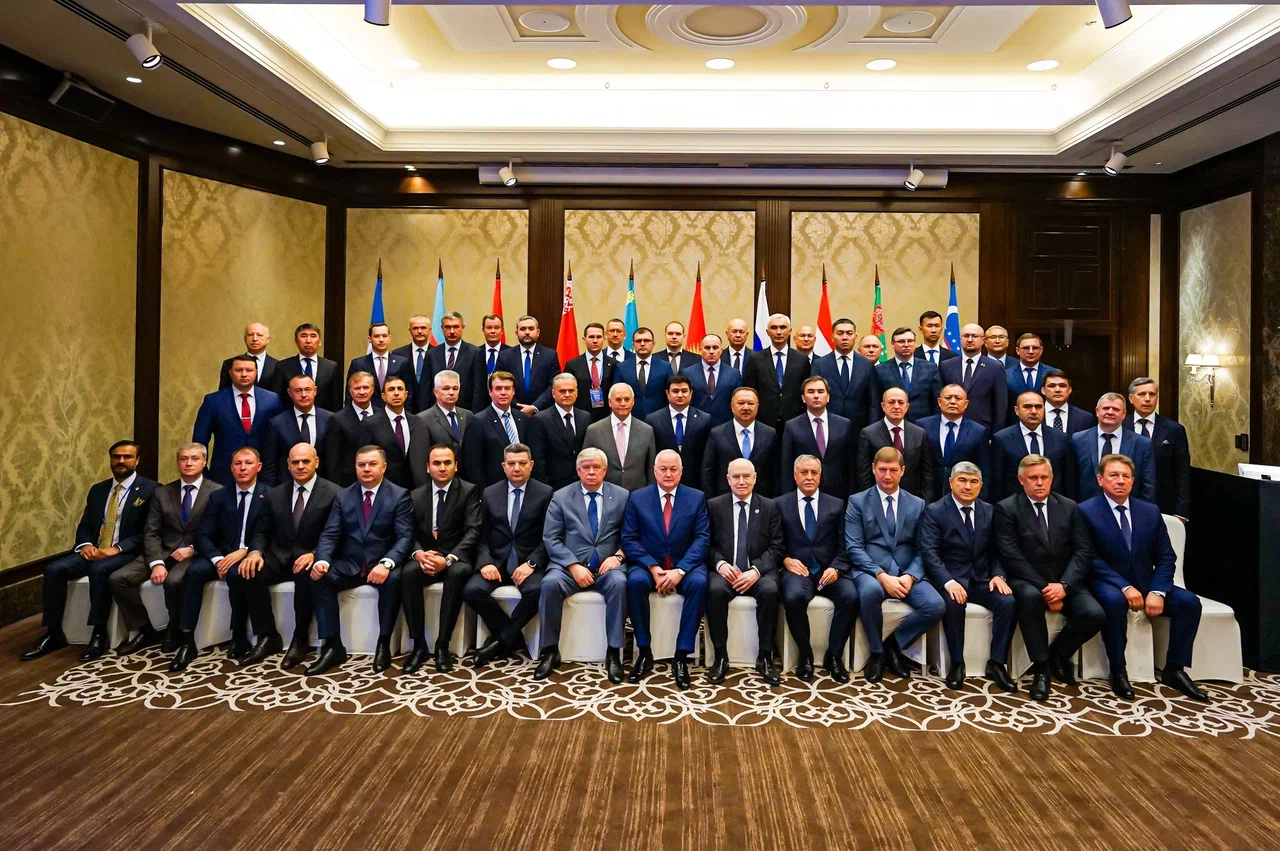
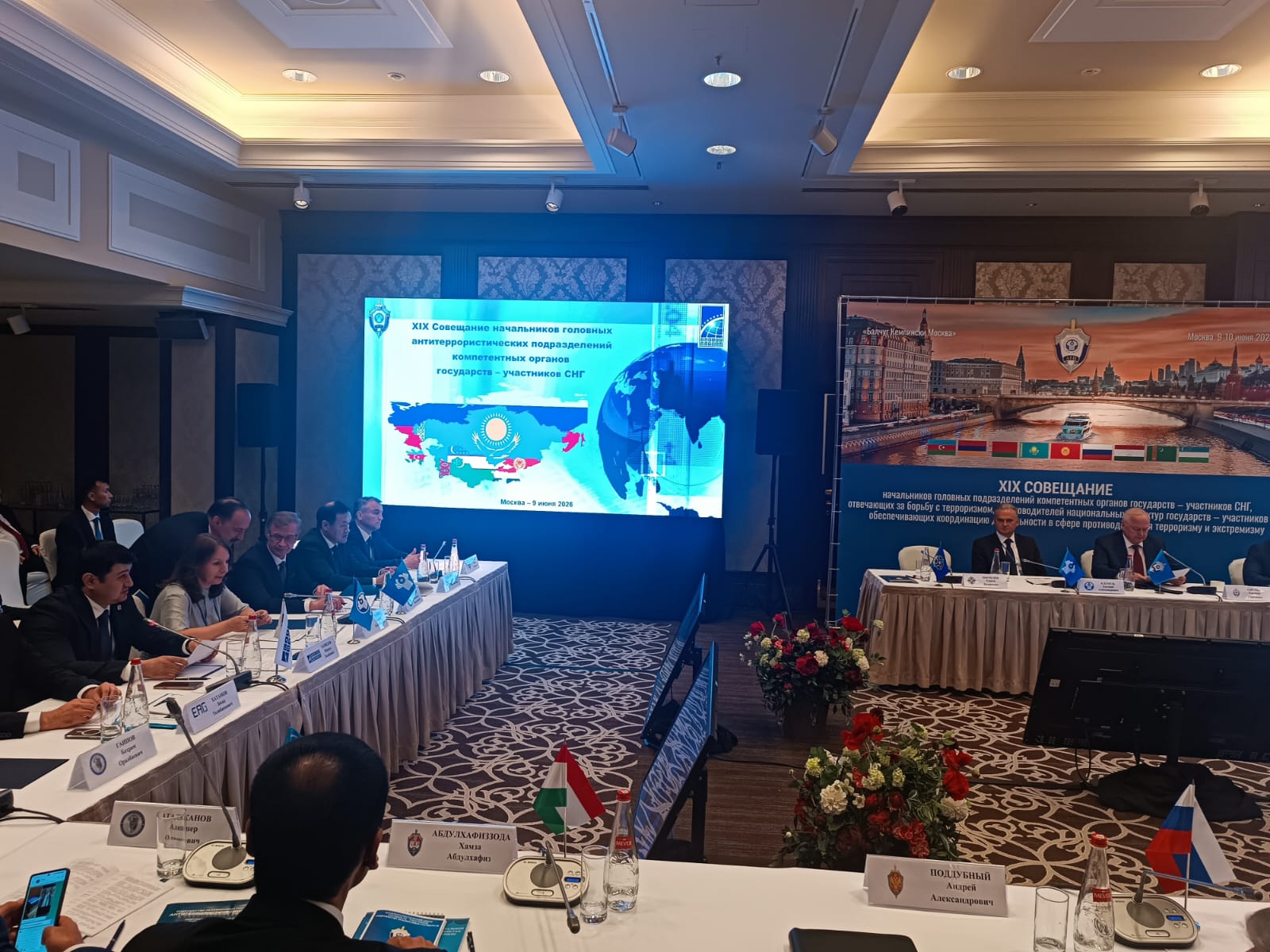
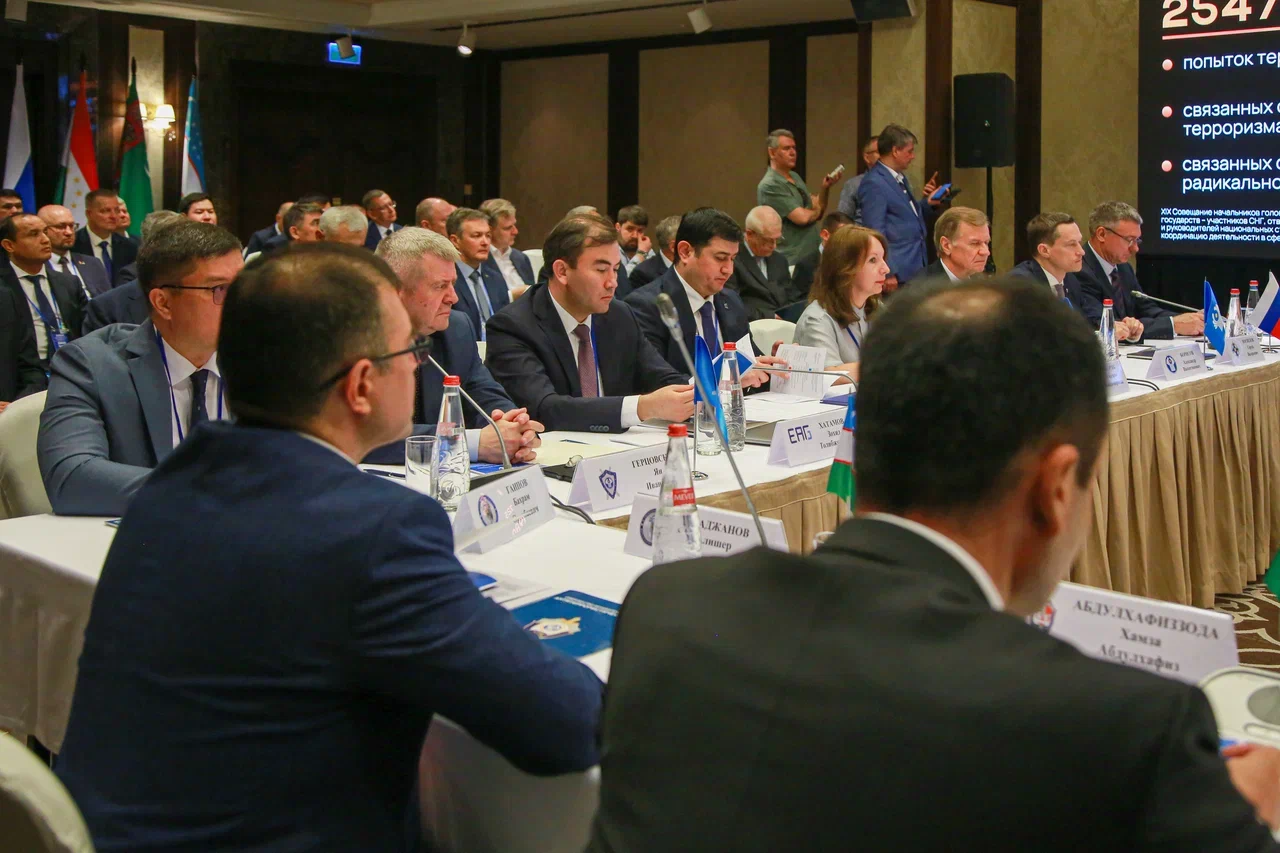
The first day of the XIX Meeting of Heads of Central Departments for Combating Terrorism of Member States of the Commonwealth of Independent States took place in Moscow on 9 June 2026.
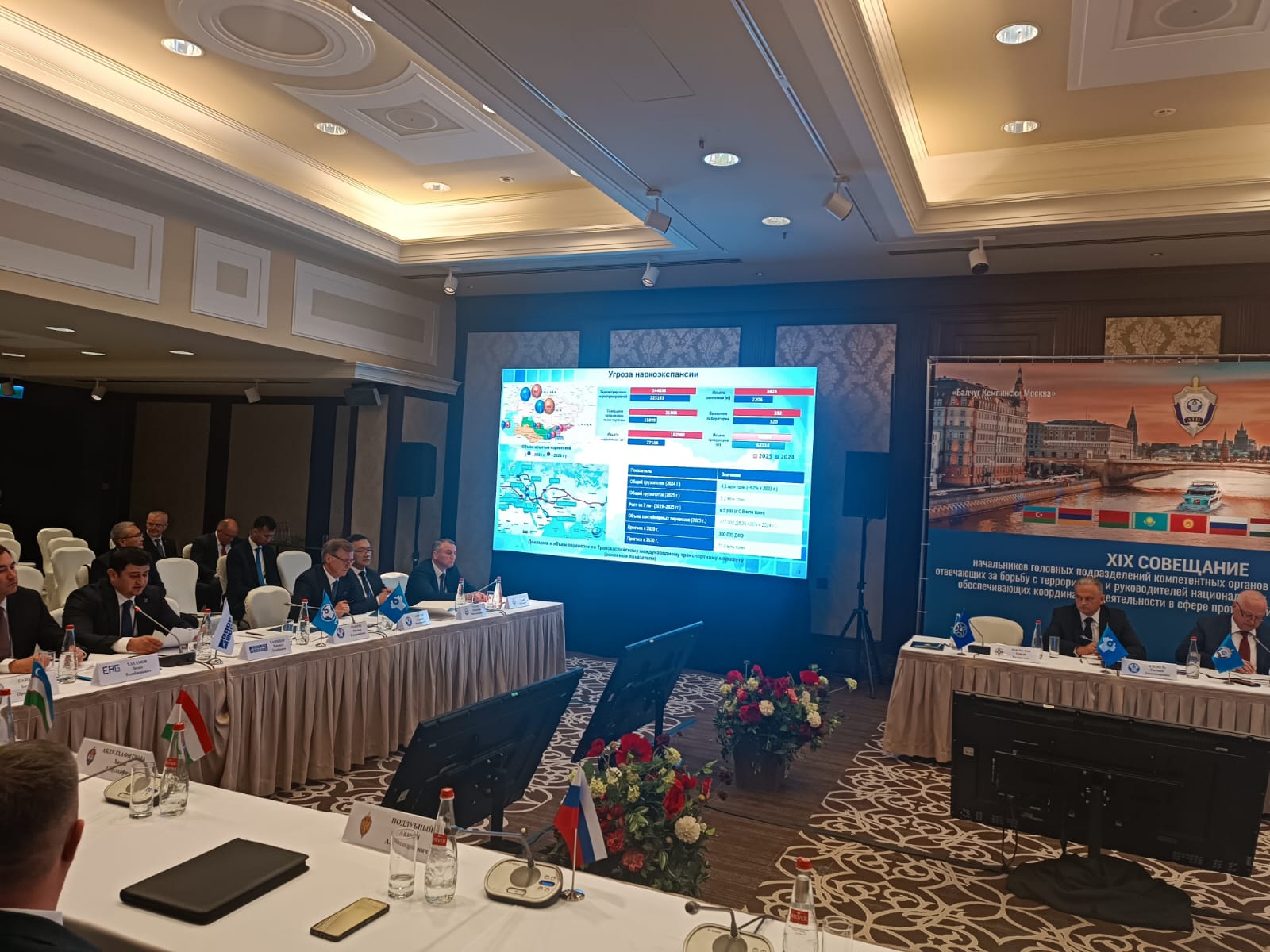
During plenary session CARICC Director M. Khamidov gave a presentation in which he drew the participants’ attention to direct link between drug trafficking and financing of terrorist activities. According to an analysis conducted by the Centre, in 2025 CARICC member states saw an 8.4% increase in drug crimes, while the volume of seized drugs rose by 33.6% and that of psychoactive substances by 55.1%. Particularly alarming is the nearly 80% increase in crimes committed by organized groups, which are forming stable transnational networks and actively using modern logistics routes and digital technologies. As noted by head of CARICC delegation, the region is increasingly viewed by international drug cartels as a promising sales market and transit territory, including along the so-called “Northern Corridor”.
In this regard, participants expressed considerable interest in the initiative to establish a unified interstate early warning system for drug threats based on artificial intelligence, which was announced by the Republic of Kazakhstan during the 69th session of the UN Commission on Narcotic Drugs and by the Republic of Uzbekistan at the Samarkand International Anti-Drug Forum in April 2026. As stated by Mr. Khamidov, this proposal has received broad support from international partners and is viewed as a promising tool for enhancing the effectiveness of collective efforts to combat transnational organized crime. Currently, CARICC, in collaboration with Kazakhstan, Uzbekistan and UNODC, is developing a concept for this system, which will enable monitoring of cyberspace and forecasting of drug threats at a whole new level.
In his closing remarks, CARICC Director outlined two practical recommendations for incorporation into the outcome document. The first concerns expanding regular exchange of analytical information between CARICC and the CIS Anti-Terrorism Center on topics related to link between illicit drug trafficking and terrorist financing, with a view to utilizing artificial intelligence tools. The second is to involve CARICC in preparation and execution of joint international operations, exercises, and training activities among CIS member states aimed at countering transnational threats, including drug trafficking and channels of terrorist financing.
Head of CARICC expressed the Centre’s readiness to be a regional platform for coordinating joint efforts by states and international partners and to promote development of modern digital mechanisms to counter drug threats based on data analysis, artificial intelligence, and interstate cooperation.
Photo Gallery